
Quick answer
EN 13501-1 classifies reaction to fire into Euroclasses A1 and A2 (non-combustible / limited combustibility), B, C, D, E and F. A1 is the best; F means no performance determined. Classes A2 to D add a smoke class (s1 least, s3 most) and a flaming-droplet class (d0 none, d1 not persisting beyond a set time, d2 neither). The main tests are EN ISO 1182 and 1716 (A1/A2), EN 13823 SBI (A2–D) and EN ISO 11925-2 small flame (B–E). DOWSIL™ FIRESTOP 700 and 813 FR are B, s2, d0 in this manual; sealants with weatherproofing function are exempt from non-combustibility requirements.
Overview
Building fires that affect the façade may be initiated externally from sources outside the building such as trash can fires, careless disposal of cigarette butts, electrical fires from cables running in façade cavities or arson. But fires can also originate from inside a building. When an internal fire outgrows a fire fighter’s containment efforts and if the floor slab fire stopping is absent, assuming the fire stop material is not approved or not installed to the required standard, the fire can escape from the openings onto the exterior façade or cavities behind the façade of the building.
At this stage, the reaction to fire of combustible building envelope components is crucial to limit propagation to other floors. Reaction to fire is the measurement of how a material or system will contribute by its own decomposition to the development and spread of a fire, particularly in the very early stages when evacuation is needed.
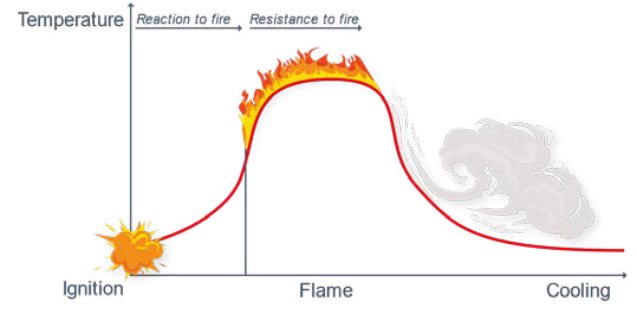
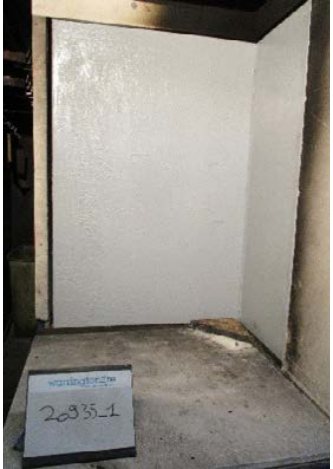
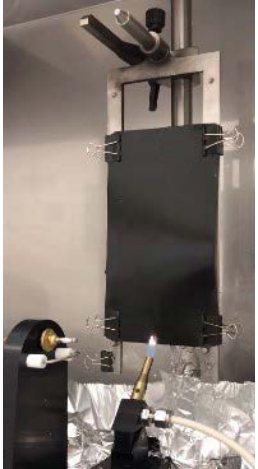
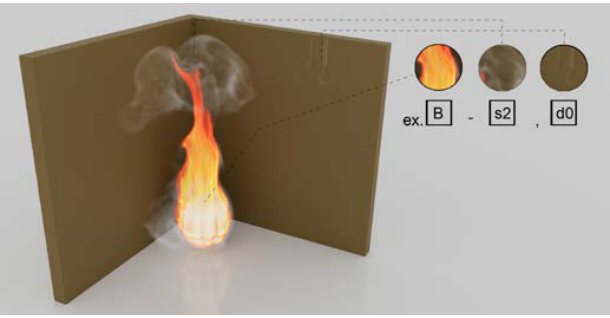
Heat release, smoke development, flaming droplets and flame spread are the main parameters being evaluated in this type of testing. Reaction to fire does not include how long a building component can resist a fire and maintain mechanical and potentially thermal protection. These aspects fall under the scope of fire resistance.
Euroclasses and test standards
European classification standard EN 13501-1 (Fire classification of construction products and building elements Part 1: classification using data from reaction to fire tests) describes the reaction to fire classification procedure for products and construction elements. Construction products are classified according to harmonized test methods into Euroclasses A1, A2, B, C, D, E and F. Testing requirements depend on the class (Table 1).
| Reaction to fire class | EU Test Standard |
|---|---|
| A1 | EN ISO 1182 and EN ISO 1716 |
| A2 | EN ISO 1182 or EN ISO 1716 and EN ISO 13823 |
| B | EN ISO 13823 and EN ISO 11925 |
| C | EN ISO 13823 and EN ISO 11925-2 |
| D | EN ISO 13823 and EN ISO 11925-2 |
| E | EN ISO 11925-2 |
The EN ISO 1716 test standard evaluates the calorific power of homogeneous materials. The small flame EN ISO 11925-2 test standard evaluates the spread of flames on a material during a certain time and over a certain height. The EN ISO 13823 single burning item test standard evaluates different parameters such as the total heat release developed by the tested material or occurrence of flaming droplets. It is possible to evaluate single materials or a building system assembly.
Around 2020, several countries such as the UK (England, Scotland and Wales) and the Middle East Area have been seen to increase their requirements in reaction to fire, whereby the use of non-combustible materials (class A1 or class A2, s1, d0) is imposed for façades above a certain height. However, a list of exemptions recognizes the vital role that certain (typically combustible) materials currently play in the performance of modern facades, particularly in terms of thermal performance and weathertightness. Seals and sealants which have a weatherproofing function have been excluded from the non or limited-combustibility requirement. Furthermore, there is no limit imposed on their use, i.e. the sealants should not have a minimum reaction to fire category (other exempted materials may have to comply with a minimum reaction to fire classification). Sealants can therefore have any classification from E to B. This requirement could be subject to change as new materials fulfilling the non-combustibility requirement may become available.
Outside of Europe, alternative testing standards can be used to evaluate the reaction to fire of sealants. A few alternatives are listed below:
- ASTM E84 – Standard Test Method for Surface Burning Characteristics of Building Materials
- UL 723 – Standard for Test for Surface Burning Characteristics of Building Materials
- GB 8624 – Classification for Burning Behavior of Building Materials and Products.
FAQ
Q. What do s1, s2 and s3 mean? A. They grade smoke production in EN 13501-1: s1 is the lowest, s3 the highest. Q. What do d0, d1 and d2 mean? A. d0 = no flaming droplets, d1 = droplets not persisting beyond a set time, d2 = neither.
Q. Which test gives class B? A. EN 13823 (SBI) together with EN ISO 11925-2 small flame, per Table 1. Q. Which tests give A1? A. EN ISO 1182 and EN ISO 1716.
Q. Do sealants have to be A1 or A2? A. Per the Dow manual, weatherproofing seals and sealants are excluded from non-combustibility requirements and can be any class from E to B; requirements may change, so check your project. Q. What is the class of DOWSIL™ FIRESTOP 700? A. B, s2, d0 (see Classification). Q. Reaction to fire vs. fire resistance? A. Reaction to fire is contribution to fire growth; fire resistance (E, I) is how long an element holds back a developed fire. Ask KCT (sales@kconstrade.com) for project support.
More technical resources
For supply, quotations and technical questions on DOWSIL™ fire rated sealants, contact us. Source: Dow technical manual (Form No. 62-2233-01-0325 S2D, © 2025 The Dow Chemical Company).
sales@kconstrade.comWhatsApp