Scope
In this manual, you will find a brief review of silicone chemistry and how it can help enable the desired level of fire behavior when installed as part of a fire rated system. The typical reaction to fire of DOWSIL™ Fire Rated Sealants is described, as well as the classification level which can be reached.
This manual then reviews the fire resistance behavior of the DOWSIL™ Fire Rated Sealant range. The importance of joint detailing as well as the general rules for extended applications are described, in the event that tested details do not correspond with the project needs. These rules are only informative. Seals that differ from the tested designs may have to be independently tested or assessed to ensure that the required specific fire ratings remain valid. In terms of testing, the details of tested penetration seals and linear joints are described for both floors and walls. When required, detailed drawings can be provided.
System use of DOWSIL™ Fire Rated Sealants for applications such as smoke barrier and perimeter barrier or curtain wall are briefly reviewed.
Finally, the manual provides application recommendations for the different products from the DOWSIL™ Fire Rated Sealant range.
This manual is mainly focused on the European certifications, both European (EN) and British standard (BS). However, UL testing results are also briefly reviewed with more information available on the UL database or from your local Dow Technical Specialist.
Introduction
Following the growing urbanization of cities, high rise buildings have seen a steady increase in popularity. As high-rise buildings tend to have more occupants who need to travel further to reach the building exits, installation of fire prevention and protection is essential. Compartmentation and active fire protection, such as the use of sprinklers, are measures designed to restrain the passage of fire through a building and allow evacuation and firefighting.
Until recently, building envelopes have largely been manufactured from non-combustible materials such as brick, precast or stone and curtain walls have used materials such as glass, aluminium and traditional insulation such as mineral wool (MW). These materials ensured the building skin did not tend to burn, and the fire load remained mostly internal. The use of newly developed materials with different fire (reaction and resistance) behavior has been cited as a potential reason for the recently observed increase in façade fires. In addition, several factors such as proper detailing and installation have been found to be crucial to ensure that the desired level of fire performance can be achieved.
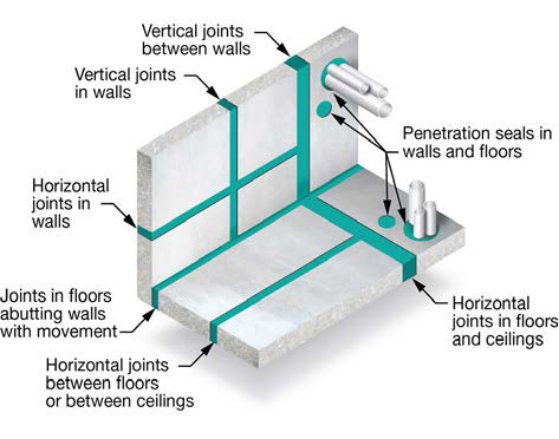
Sealants can play an important role in fire protection and help limit the spread of fire and smoke. Thanks to their distinct composition, Dow Building Science Silicones are particularly renowned for their movement capability, adhesion profile, UV and temperature stability and durability. They help protect against water and air intrusion and offer excellent all-round protection and performance against damaging weather conditions. But silicone materials can also be advantageous for passive fire protection as they are non-flame propagating, do not produce flaming droplets and have a limited non-toxic smoke development. These material properties can be especially beneficial in fire rated systems and designs which include joints in penetration and perimeter seals.
When selecting fire proofing systems, Dow Building Science offers a range of DOWSIL™ Sealing solutions for vertical and horizontal linear joint applications as well as various penetration designs, fenestrations and building element connections both in walls and floors.
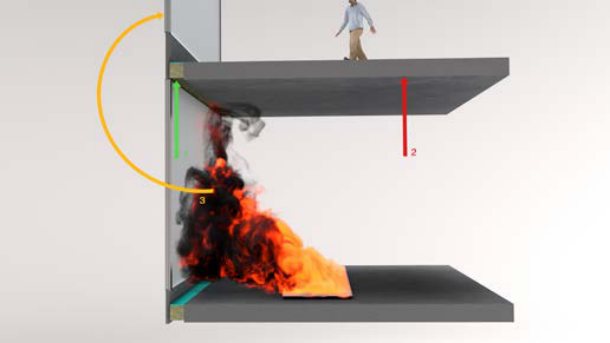
Therefore, the behavior in reaction to fire and fire resistance of building materials used for compartmenting or in the building envelope is key in allowing enough time for tenants to exit a building.
Dow’s technologies have been certified by accredited fire test institutes in a wide range of configurations. Dow’s Technical Specialists look forward to collaborating on future projects and assisting in the selection of our technologies.
More technical resources
For supply, quotations and technical questions on DOWSIL™ fire rated sealants, contact us. Source: Dow technical manual (Form No. 62-2233-01-0325 S2D, © 2025 The Dow Chemical Company).
sales@kconstrade.comWhatsApp