
Silicone is industrially produced by the Direct Process (the Grignard process is the alternative): SiO₂ is reduced to Si metal (SiO₂ + 2C → Si + 2CO), reacted with CH₃Cl to give (CH₃)₂SiCl₂ and related chlorosilanes, hydrolyzed to silanediols with recycled HCl, condensed into a polymer chain and end-blocked.
2. Manufacturing methods
실리콘의 제조 방법에는 크게 Direct Process와 Grignard Process가 있다. 공업적으로는 대량 생산에 적합한 Direct Process가 사용되고 있다. 여기서는 주로 Direct Process에 대해 설명한다.
2.1 전반적인 제조 방법
실리콘 제품의 전반적인 제조 공정을 도식화하면 다음과 같다.
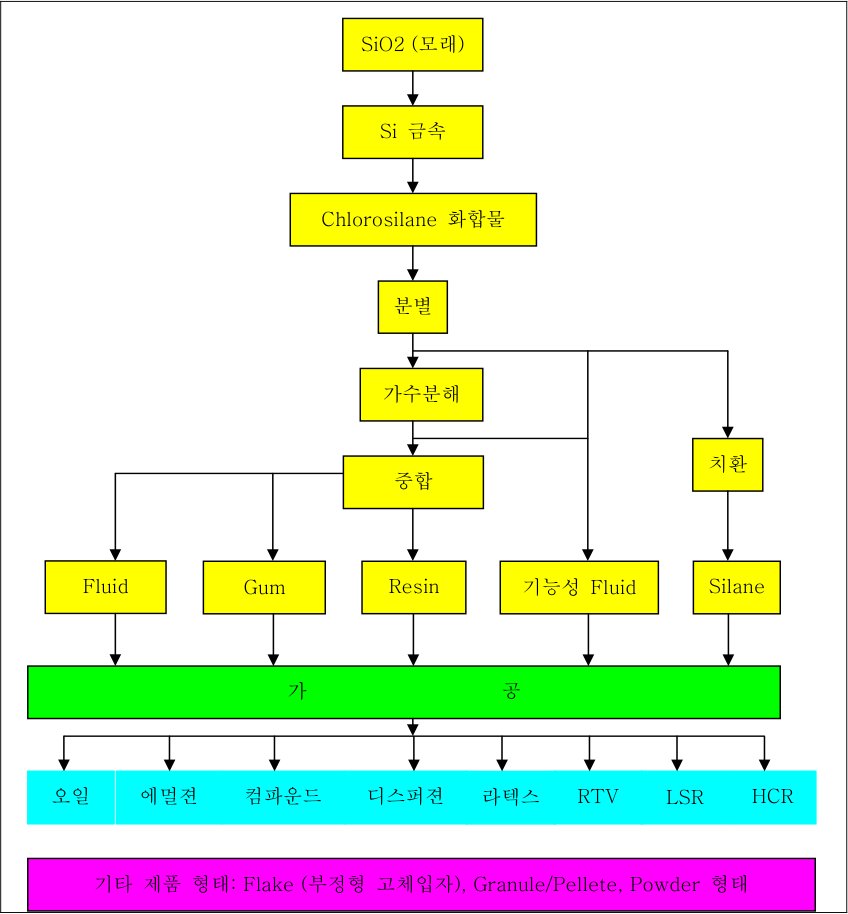
2.2 실리콘의 합성
Silicone의 기본적인 합성 메커니즘은 다음과 같다.
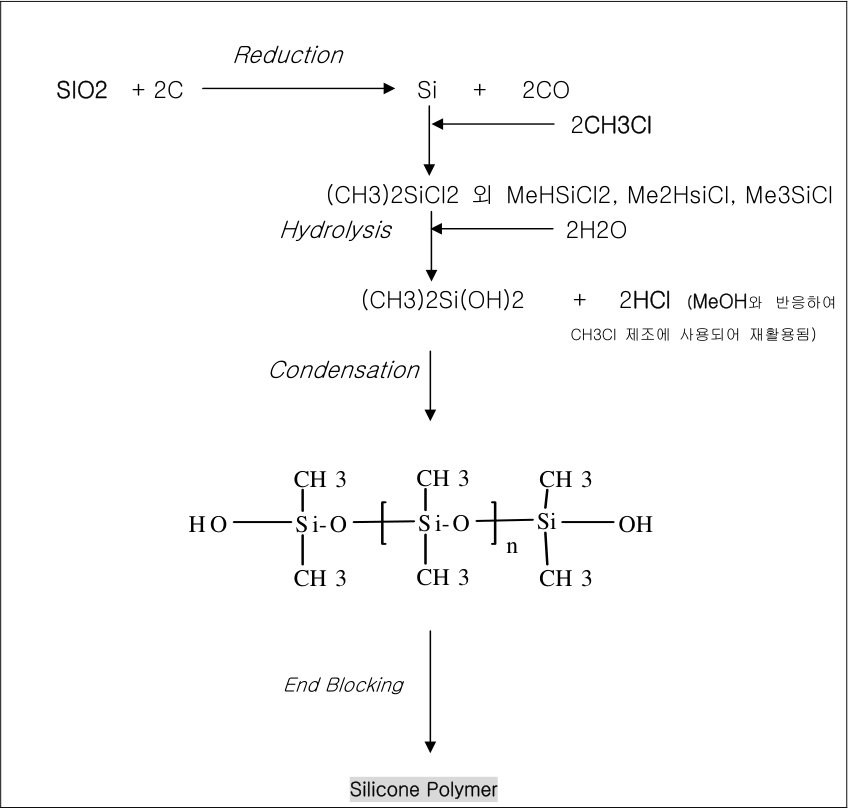
Frequently asked questions
Which process is used industrially to produce silicone?
The Direct Process, which suits mass production, rather than the Grignard Process.
What is the first reaction in silicone production?
Reduction of SiO₂ (sand) with carbon to silicon metal: SiO₂ + 2C → Si + 2CO.
What happens to the HCl formed in hydrolysis?
It is reacted with methanol (MeOH) to make CH₃Cl, so it is recycled.
This page is based on the following document. Values are typical, not specifications; verify with the original and product data sheets before design or purchase.
다우코닝 실리콘 교육자료 「제 2 장 실리콘 일반」(한국어, 23쪽) — Dow Corning Korea / 한국어 원문 수록 및 영어 번역: 한국건설트레이딩(KCT) / 보충: 공개 문헌 (아래 참고 자료 페이지)
Suggested citation: “How Silicone Is Made: Direct Process and Synthesis Mechanism”, Korea Construction Trading (KCT) Technical Information, https://kconstrade.com/en/technical/basics/manufacturing-process
More technical resources
For DOWSIL™ silicone selection, quotations and technical advice, please contact Korea Construction Trading. We do our best to support you technically, from product selection to process-condition review and troubleshooting. Technical support details →
sales@kconstrade.com010-8939-0284WhatsApp