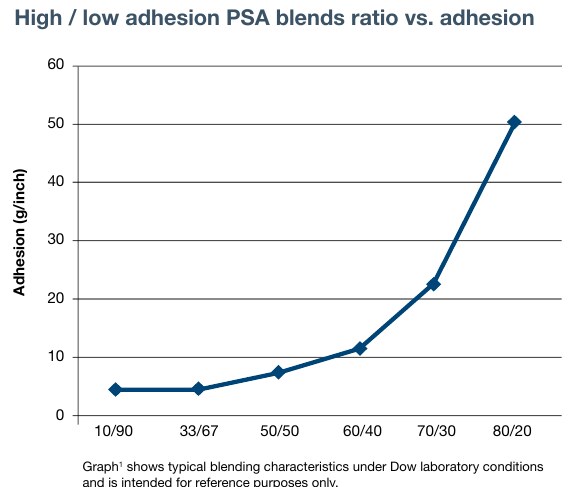
Dow silicone pressure sensitive adhesives (PSAs) offer a wide service-temperature range, adhesion to low-energy surfaces, conformability, clean removability, moisture/UV resistance, sound and shock dampening and electrical insulation properties that acrylic and natural-rubber adhesives cannot match. Different platinum-cure PSAs can be blended to reach a range of adhesion levels (about 5 to 50 g/in for 10/90 to 80/20 high/low-adhesion blend ratios in Dow laboratory conditions).
Choose Dow silicone PSAs for high performance
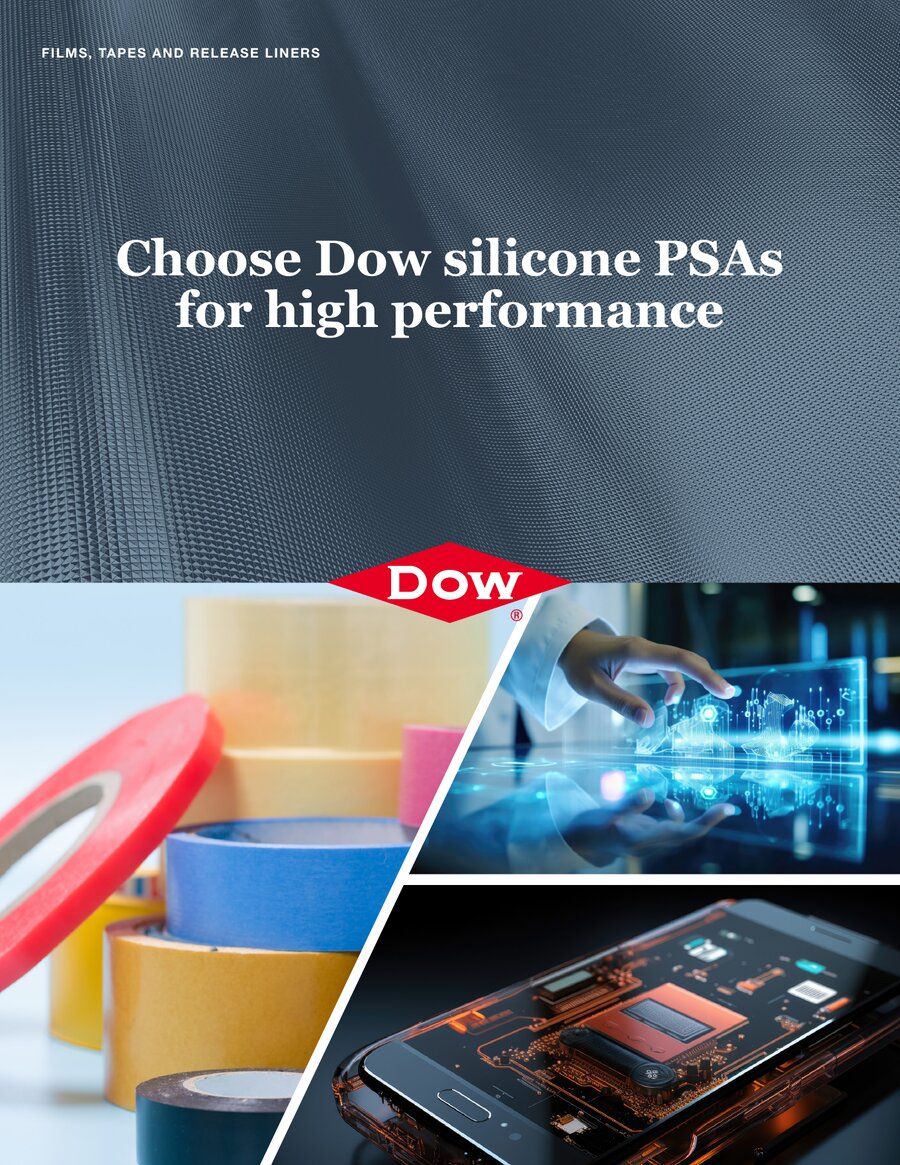
Dow is a leader in silicone-based solutions for the fast-growing PSA industry. You work to balance demands for tack, adhesive/cohesive strength and electrical properties while also facing various substrate and processing parameters. And through it all, you look for the right balance of cost and performance to be competitive. We work to design products that help you meet these needs and find that balance.
Advantages and capabilities
Dow silicone pressure sensitive adhesives (PSAs) offer critical advantages that cannot be matched by organic adhesives such as acrylic, natural rubber and other competing materials. The pressure sensitive adhesives in this guide offer the following high-performance silicone capabilities:
- A wide service-temperature range
- Adhesion to low-energy surfaces
- Conformability
- Clean removability
- Moisture/UV resistance
- Sound dampening / shock dampening
- Electrical insulation properties
- Much more
You will find that our high-performance line of silicone PSAs can help you make specialty tapes, labels and films better and improve your overall system success. You also can use them as independent adhesives for a variety of bonding, fastening and holding applications.
Compatible substrates
They adhere to a wide range of substrates, including:
- Glass
- Silicone rubber
- Teflon film
- PTFE (polytetrafluoroethylene)
- Paper
- Silicone-varnished cloth
- Mylar PET film
- FEP (fluorinated ethylene propylene)
- Fabric
- Silicone/glass laminates
- Kapton polyimide film
- Aluminum foil
- Plastics
- Polyester
- Glass cloth
- Stainless steel
Silicone-based solutions for customer success
Dow silicone-based solutions for pressure sensitive adhesives provide exceptional adhesive performance for specialty tapes, high-performance films and labels that cannot be matched by organic adhesives such as acrylic, natural rubber and other competitive materials. No matter what your goals are – to innovate, grow reliably or drive costs down – we have the solutions you need. Our more than 60 years of industry experience give us a unique understanding of the challenges you face, as well as the expertise to provide you with a total systems solution tailored to meet your needs. Choose from our wide range of pressure sensitive adhesives to find the exact solution you need to grow your business.
Selecting the best silicone PSA for your application
Selecting the best silicone PSA for your application can be a complex undertaking. Substrate requirements; equipment limitations; performance demands for tack, adhesion and cohesive strength and the need for release all enter into the picture. This guide will help you simplify the selection process.
- Begin with Table 1, “Application overview.” It tells you which adhesives in the global silicone PSA line meet your basic application needs for specialty tapes, high-performance films and labels.
- Then consult Table 2, “Product specifications and typical performance properties,” for more in-depth information: whether a peroxide- or platinum-cure silicone PSA is better for your needs and which product best meets your requirements for tack, adhesion and high-temperature hold and other needs.
To meet customers’ diverse application needs, different platinum-cure PSAs can be blended to achieve a variety of adhesion levels. The graph below shows examples of blending ratios to achieve varying adhesion levels. With Dow brand silicone PSAs, there are many ways to achieve the exact balance of performance properties your application requires. If none of the materials in this guide appear to meet your needs, contact your Dow technical representative for additional suggestions.
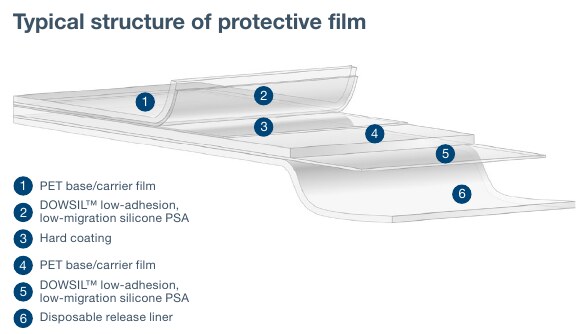
Typical structure of protective film
Frequently asked questions
What substrates do Dow silicone PSAs adhere to?
Glass, silicone rubber, Teflon film, PTFE, paper, silicone-varnished cloth, Mylar PET, FEP, fabric, silicone/glass laminates, Kapton polyimide, aluminum foil, plastics, polyester, glass cloth and stainless steel, among others.
How can adhesion be adjusted?
Different platinum-cure PSAs can be blended; in Dow’s laboratory example a high/low-adhesion blend moves from about 4–5 g/in at 10/90 to about 50 g/in at 80/20.
Where can I get technical support for Dow silicone PSAs in Korea?
Korea Construction Trading (KCT) supports product selection, technical documents, process conditions and troubleshooting to the best of its ability: sales@kconstrade.com, +82 10-8939-0284.
This page is based on the following document. Values are typical, not specifications; verify with the original and product data sheets before design or purchase.
Dow, “Silicone PSAs for High Performance Selection Guide”, Form No. 30-1315-01-0524 S2D, © 2024 The Dow Chemical Company (2024 최신판); Dow Corning, “Product Selection and Application Guide — Dow Corning® brand High-Performance Silicone PSAs”, Form No. 30-083B-01 (AGP7825), ©2001, 2006 Dow Corning Corporation (2006 구판). 한국어 번역·정리: 한국건설트레이딩(KCT)
Suggested citation: “Choose Dow Silicone PSAs for High Performance: Comprehensive Offerings (2024 Guide)”, Korea Construction Trading (KCT) Technical Information, https://kconstrade.com/en/technical/psa/high-performance-psa-overview
More technical resources
For DOWSIL™ silicone selection, quotations and technical advice, please contact Korea Construction Trading. We do our best to support you technically, from product selection to process-condition review and troubleshooting. Technical support details →
sales@kconstrade.com010-8939-0284WhatsApp