
Freshly applied DOWSIL™ sealant skins over in about 5 to 10 minutes at room temperature and 50% RH, and cures inward to a depth of about 1/8" in 24 hours. Tool before the skin forms. Acetoxy products release a small amount of acetic acid during cure that may corrode some metals; platinum-cure silicones (including foams) can be inhibited by certain compounds.
Sealant Application
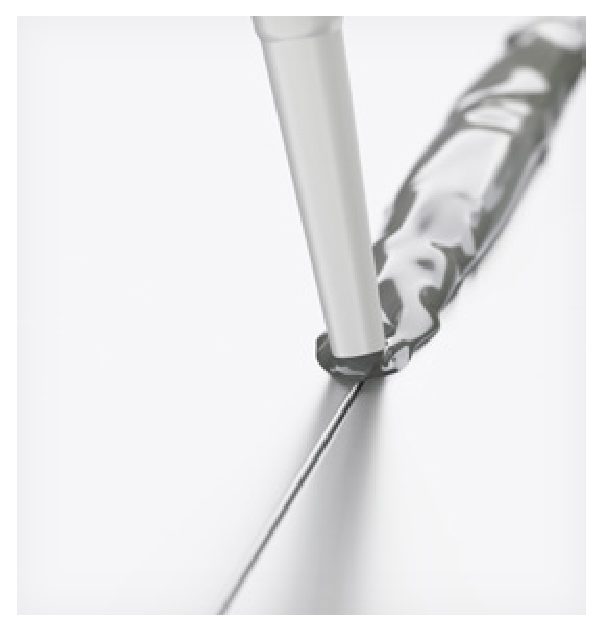
Apply DOWSIL™ brand adhesives/sealants to one of the prepared surfaces, then quickly cover with the other substrate to be bonded. On exposure to moisture, the freshly applied material will “skin over” in about 5 to 10 minutes (depending on the product) at room temperature and 50% relative humidity.
Tool the sealant to coat or wet the substrate surface for maximum bonding. This typically is done by properly filling the joint first and then dry-tooling the sealant by pressing and pulling a round-tipped spatula or similar tool across the sealant surface. This step forces sealant into joint surfaces and helps remove air pockets or voids at the bond line. Tooling should be completed before the skin forms.
Keeping the primed surface clean may allow application of the silicone elastomer to be delayed – but in some cases, if too much time elapses, lower adhesion can result. Users are encouraged to determine the optimal cure conditions for their specific applications and the effects of any hold times imposed between applications of the primer and sealant. In some cases, it may be recommended to reprime surfaces if 8 to 24 hours elapse before the silicone sealant can be applied.
Cure Time
After skin formation, cure continues inward from the surface. In 24 hours (at room temperature and 50% relative humidity), DOWSIL™ adhesive/sealant will cure to a depth of about 1/8". Very deep sections, especially when access to atmospheric moisture is restricted, will take longer to cure completely. Cure time is extended at lower humidity levels.
Because the sealants cure by reaction with moisture in the air, keep the container tightly sealed when not in use. A plug of used material may form in the tip of a tube or cartridge during storage. This is easily removed and does not affect the remaining contents.
Compatibility
Some DOWSIL™ adhesives/sealants release a small amount of acetic acid during cure. This may cause corrosion on some metallic parts or substrates, especially in direct contact or when the cure is carried out in a totally enclosed environment that does not allow cure by-products to escape.
Platinum catalysts used in addition-cure silicone sealants – including silicone foams – are sensitive to contamination by certain compounds that have the power to stop or inhibit cure. For more information, refer to “Guarding against potential inhibitors/poisons of platinum-catalyzed addition-cure release coatings,” Form No. 30-1053-01, available in the Technical Library on consumer.dow.com or upon request from Dow customer service.
Cleanup / Sealant Removal
Cured silicone can be removed from a surface with a sharp blade if the cured silicone material is accessible. If it is difficult to cut through, solvents – such as IPA, toluene, xylene, naphtha or mineral spirits – may be used to soften the cured sealant. DOWSIL™ OS Fluids also can be used to help soften cured silicone and/or remove silicone residue after it has been removed mechanically from a surface. DOWSIL™ OS Fluids will generally be a lower-VOC alternative to standard solvents.
Limitations, Health and Environmental Information
Limitations: Refer to individual product data sheets for use limitations.
Health and Environmental Information: To support customers in their product safety needs, Dow has an extensive Product Stewardship organization and a team of Product Safety and Regulatory Compliance (PS&RC) specialists available in each area. For more information, please see our website, consumer.dow.com, or consult your local Dow representative.
Frequently asked questions
How long does DOWSIL™ sealant take to skin over and cure?
It skins over in about 5 to 10 minutes (depending on the product) at room temperature and 50% RH, then cures inward to about 1/8" in 24 hours; deep sections or limited moisture access and low humidity take longer.
When should the sealant be tooled?
Tooling (dry-tooling with a round-tipped spatula) should be completed before the skin forms, to force sealant into the joint surfaces and remove air pockets or voids.
How do you remove cured silicone sealant?
Cut it with a sharp blade if accessible; otherwise soften with IPA, toluene, xylene, naphtha or mineral spirits. DOWSIL™ OS Fluids, generally a lower-VOC alternative, can help soften it and remove residue.
What can inhibit the cure of silicone foams?
Platinum catalysts in addition-cure silicones, including foams, are sensitive to contamination by certain compounds that can stop or inhibit cure (Dow Form No. 30-1053-01).
Product data and descriptions on this page are reproduced from the following Dow document. Values are typical properties, not specifications.
Dow, “DOWSIL™ Silicone Sealants and Foams for Industrial, Appliance and Maintenance – Selection Guide”, Form No. 80-8283-01-0922 S2D (© 2022 The Dow Chemical Company)
Suggested citation: “Sealant Application, Cure Time, Compatibility and Cleanup”, Korea Construction Trading (KCT) Technical Information, https://kconstrade.com/ja/technical/industrial/application-and-cure